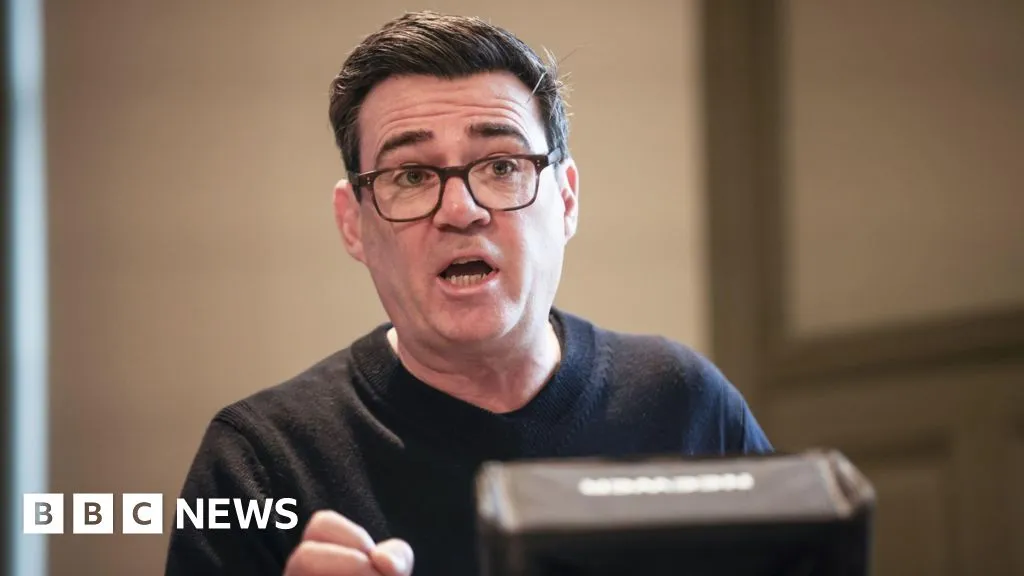
In a move to assuage jittery markets, Greater Manchester Mayor Andy Burnham has reaffirmed his commitment to the UK government's established fiscal rules, a decision that comes at a time of political turbulence and economic uncertainty.
Burnham's recent statement marks a pivotal shift in his campaign strategy as he braces for the impending Makerfield by-election, alongside potential aspirations for a Labour leadership bid. After weeks of speculation regarding possible alterations to borrowing constraints, particularly in light of rising defense expenditures, Burnham's campaign confirmed on Monday that he would adhere strictly to the existing financial regulations.
"He has committed to maintaining the rules as they currently stand. It is absolutely essential to recognize that the cost of borrowing presents a significant limitation for the government," explained a former minister and Burnham supporter. Shortly thereafter, UK 10-year gilt yields—an indicator of the country's borrowing interest rates—saw a decline, credited to Burnham's efforts to restore confidence in turbulent market conditions.
Bond market expert Mohamed El-Erian commented, "Burnham's clarifications played a role in the UK bond market's positive performance today, especially during this period of global financial upheaval." Just hours before Burnham's announcement, the International Monetary Fund had urged the UK to maintain its fiscal framework, advocating for a recalibration of government borrowing at a pace faster than many other major economies.
Burnham has suggested that while guidelines to reduce national debt are pivotal, a broader political reform is equally necessary to eliminate the inherent uncertainties affecting market stability. During an interview with ITV News over the weekend, he stated, "We must have a coherent strategy to diminish debt, but equally, it's crucial to transform the political landscape to alleviate the volatility in British politics, which directly impacts market confidence."
Global events, notably the escalating tensions in the Middle East, have exerted additional pressure on governments worldwide, prompting speculation about future inflation and interest rates. Many analysts argue that the precarious political climate has heightened sensitivities in the bond market just as broader geopolitical conflicts threaten economic stability.
While Burnham aims to catalyze infrastructure investment, particularly in housing and transport, his commitment to current fiscal rules may impose difficult choices regarding taxation and welfare spending. As an advocate for high-speed rail initiatives in Northern England, his policies might have to navigate a complex landscape of fiscal accountability.
Meanwhile, Conservative shadow chancellor Mel Stride has warned of potential repercussions dubbed the "Burnham penalty," stating that a change in leadership could lead to increased borrowing and a detrimental rise in taxes, thereby compounding market uncertainties.
In response, Burnham's team has criticized the Conservative approach as a continuation of "failed economics" that has impoverished regions like Makerfield for decades. Chancellor Rachel Reeves defended the government's fiscal discipline, asserting it ensures stability and boosts confidence among bondholders. "We remain dependent on the goodwill of international markets to purchase our government bonds," she noted in a recent parliamentary committee.
As the political landscape evolves and markets brace for the unexpected, Burnham's steadfast commitment to fiscal rules may serve as a crucial stabilizing factor in an increasingly unpredictable environment.
Source: BBC News - Business