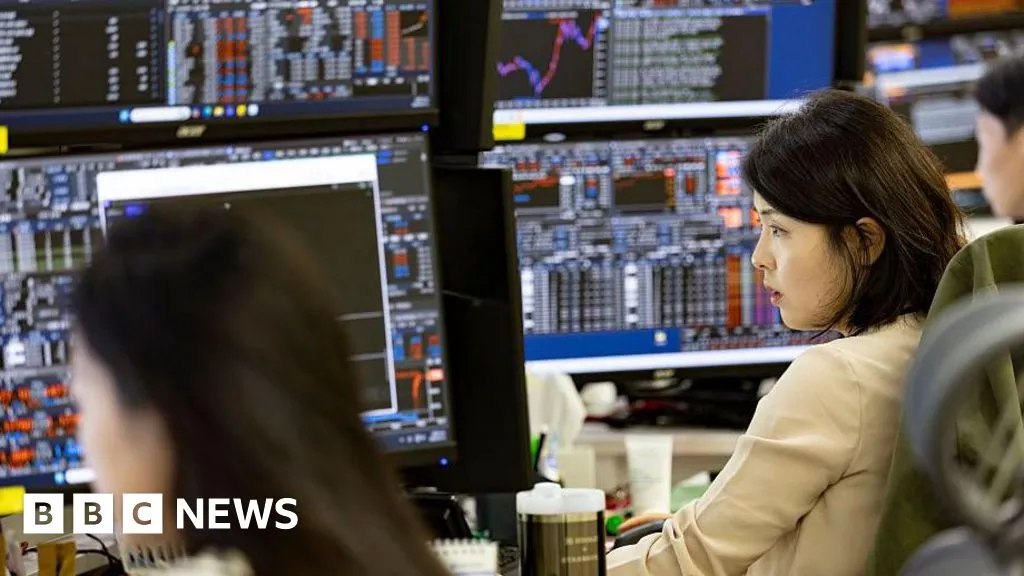
Asian markets reeled on Monday as a stunning combination of escalating geopolitical tensions and a correction in tech stock valuations sent shockwaves through financial systems. South Korea’s Kospi index witnessed a harrowing plunge of nearly 9% within moments of opening, compelling a 20-minute trading halt—its third such occurrence this year, implemented to temper frenzied selling. Japan’s Nikkei 225 similarly succumbed to pressure, tumbling approximately 4%, marking its steepest fall in three months.
The tumble in Asian indices followed a tumultuous Friday on Wall Street, where the Nasdaq experienced its largest drop in over a year, losing around 4% amid growing fears of higher interest rates stemming from persistently high inflation and a lower-than-anticipated unemployment rate.
Market experts attributed the anxiety to a volatile mix of factors, primarily intertwined with the tech sector's recent overvaluation and the acute rise in energy prices prompted by renewed hostilities between Iran and Israel. Charu Chanana, chief investment strategist at Saxo, remarked on the unsettling market dynamics: "We are seeing a significant repositioning among investors who are starting to question the sustainability of recent investments in artificial intelligence. The burden of proof has gone up substantially."
Trading has resumed on the Korean exchange, with the Kospi index settling at around a 5% deficit as major technology stocks nosedived, including critical players like Samsung and SK Hynix. South Korean President Lee Jae-myung addressed the situation with cautious optimism, asserting that while volatility is anticipated, domestic stocks remain "slightly undervalued," hinting at potential long-term investment opportunities.
Simultaneously, oil prices surged in response to the escalating Iran-Israel conflict, with Brent crude rising 3.7% to $96.50 per barrel. This abrupt surge raised alarm about fueling inflationary pressures that could deter economic recovery across Asia. Iran has signified that the recent attacks mark the initiation of a renewed assault in retaliation for what it claims are repeated violations of a ceasefire agreement established in April among the U.S., Israel, and Iran.
In the wake of the attacks, U.S. President Donald Trump expressed his concern, urging restraint while framing ongoing negotiations as being close to a favorable outcome. "We are very close to a final deal with Iran. It’s going to be a good deal. I don’t want it to blow up because of what is happening now," Trump stated, highlighting the fragile nature of regional stability.
As geopolitical uncertainties loom large, market analysts foresee continued volatility, with the global oil market’s future hanging in the balance unless effective diplomatic solutions are reached. Jiajia Yang, an associate professor at James Cook University in Australia, noted, "The strikes exemplify a range of unresolved political issues, indicating that unless diplomatic channels can facilitate dialogue, oil prices are likely to remain unpredictable."
As the situation evolves, investors and traders will remain vigilant, closely monitoring signals for any shifts in economic fundamentals amidst the pressures from both the tech sector and international tensions.
Source: BBC News
Source: BBC News - Business