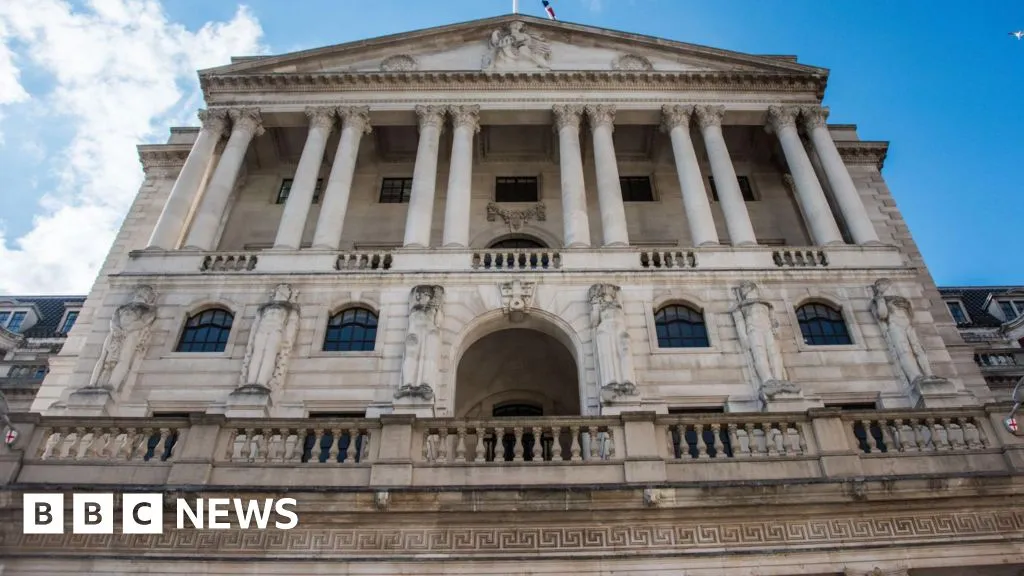
The Bank of England (BoE) is poised to hold its interest rates steady at 3.75%, marking the fourth consecutive meeting without change, as policymakers navigate a turbulent global landscape influenced by ongoing uncertainties in the Middle East. The looming Iranian conflict and its impact on energy prices have been critical in shaping monetary policy discussions.
Despite recent upheaval, the UK inflation rate has stabilized at 2.8%, primarily due to a noticeable slowing in food price increases, which dropped to a 17-month low. The Office for National Statistics (ONS) highlighted that transport costs have surged, yet the moderation in the prices of essential commodities like meat, dairy, and vegetables has tempered inflationary fears.
In April, the Monetary Policy Committee (MPC) indicated potential interest rate increases later in 2026, especially in response to significant energy price shocks stemming from the Iran conflict. However, recent developments, including the announcement of a peace deal between the U.S. and Iran, have brought renewed optimism. U.S. President Donald Trump asserted that the agreement would facilitate the reopening of the strategically vital Strait of Hormuz, which is critical for global oil and gas supplies.
This peace initiative has led to a significant decline in oil prices, alleviating some inflationary pressures. With traders anticipating a restoration of stable shipping routes, analysts are hopeful that energy cost surges might ease, reducing the likelihood of the previously projected worst-case inflation scenarios.
Nevertheless, challenges remain as analysts predict that inflation could accelerate again in the UK due to the delayed impact of rising wholesale energy prices on domestic bills. The energy price cap imposed by regulator Ofgem is set to increase by 13% in July, igniting concerns about a new wave of inflation.
Victoria Scholar, head of investment for Interactive Investor, noted, "UK inflation is likely to rise over the summer, particularly as we approach the next Ofgem price cap, indicating that the current subdued inflation data is merely the calm before the storm." Additionally, expectations for interest rate increases appear subdued, with some analysts predicting no further hikes for the remainder of the year.
In contrast, the European Central Bank recently raised its interest rates for the first time in nearly three years, citing inflationary pressures stemming from the ongoing conflict. As it stands, the BoE's base rate plays a crucial role in shaping borrowing costs across the financial landscape, influencing mortgage rates and savings interest for consumers.
Currently, the average interest rate for a two-year fixed mortgage stands at 5.60%, a substantial rise from 4.83% earlier this year, while five-year mortgage rates also reflect upward trends, now averaging 5.57%. These figures encapsulate the challenging economic environment faced by UK households navigating their financial futures amid shifting monetary policies.
As the MPC prepares for its next announcement on Thursday, all eyes will be on external developments that could further influence the inflation outlook and, consequently, the trajectory of interest rates moving forward.
Source: BBC News
Source: BBC News - Business