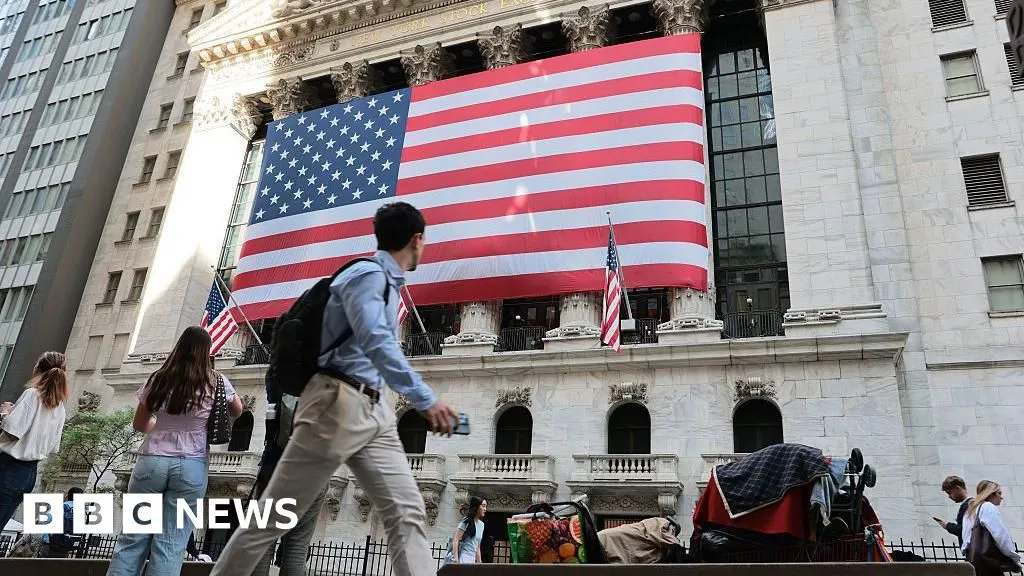
Defying expectations, the American economy continues to thrive even as it navigates global upheavals that have stifled growth elsewhere. From trade wars to geopolitical tensions, the resilience demonstrated by the US has baffled many economists seeking answers to a perplexing question: why does the US consistently outperform its peers?
In stark contrast to the troubled landscapes of many developed nations, the US has seen steady growth despite the relentless tide of external pressures. Recent challenges—including sweeping tariffs introduced during the Trump administration, mass immigration policy shifts, and the unrest in the Middle East that has heightened oil prices—were anticipated to destabilize the American economic foundation. Nonetheless, ongoing economic expansion and a controlled inflation rate have characterized America's recovery.
The divergence between American and European economic resilience is also rooted in stark cultural attitudes towards risk. As Rebecca Christie, a senior fellow at the Brussels think tank Bruegel, explains, “Americans are far more solutions-oriented and willing to embrace short-term risks for long-term benefits.” This contrasts sharply with the prevailing European mindset, where risk aversion often hampers innovation and flexibility within the market.
“Companies in Europe predominantly depend on bank loans for funding, limiting flexibility compared to their US counterparts who can engage with the stock market,” Christie elaborates, highlighting how this financing structure can stymie growth potential.
Economic Health and Inequality
Despite the encouraging trends observed at a macroeconomic level, Christie cautions against overlooking the pain experienced by vulnerable demographics within the US. While the economy flourishes overall, high levels of inequality persist, meaning that many Americans face significant challenges in securing stable employment and financial security.
With the US economy's capacity to weather storms still a subject of fascination, the intricate interplay between adaptability and cultural perspectives on risk will undoubtedly continue to shape its trajectory in a complex global landscape.
Source: BBC News - Business