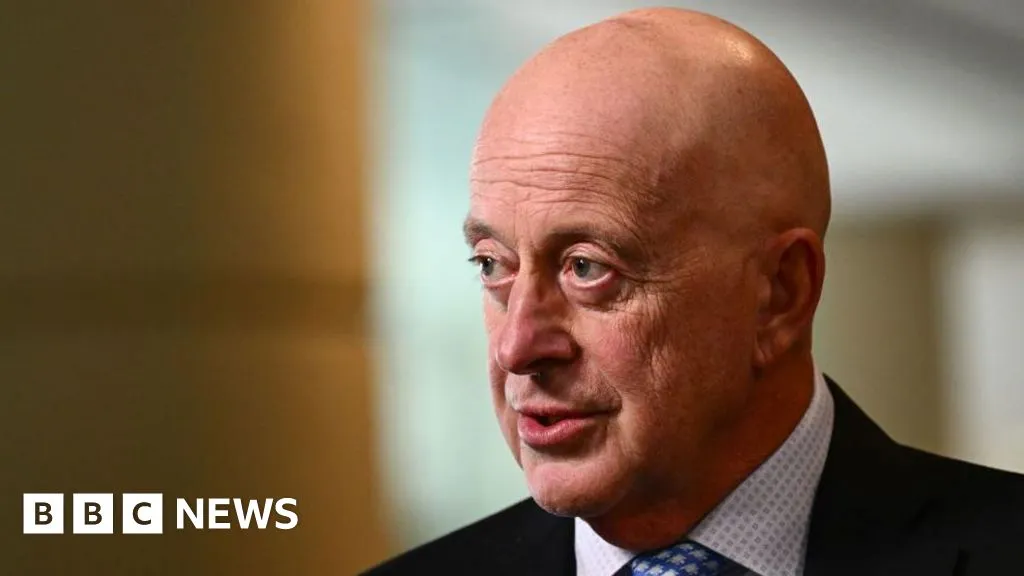
In a contentious stance that has drawn both support and criticism, Mondelez International's chief executive, Dirk Van de Put, has stood firm on the company’s continued operations in Russia, asserting it was the "right decision" in the wake of the ongoing conflict with Ukraine.
Speaking to the BBC as part of the Big Boss Interview series, Van de Put acknowledged the complexities of navigating business ethics amid geopolitical strife, particularly as the company's taxes inadvertently contribute to a war that has resulted in considerable loss of life. “I’m not pleased about that,” he admitted, emphasizing the harsh realities facing multinational corporations operating in volatile regions.
Amid rampant calls for boycotts and withdrawals from the Russian market, a strategy adopted by several major Western brands, Mondelez has opted for a different path, one that Van de Put insists was necessary to protect the livelihoods of their employees. He revealed, “If we’d pulled out, the Kremlin would likely have seized our operations, potentially amplifying their war efforts by selling our products.”
Sales from Mondelez’s Russian operations have reportedly generated between $1 billion and $1.4 billion annually since the conflict escalated, highlighting the significant financial stakes involved. More than 70 UK MPs have petitioned the company to terminate its business ties with Russia, emphasizing the moral implications of continuing operations in a nation responsible for grievous humanitarian crises.
“Continuing to operate in a nation responsible for the deaths of countless Ukrainian civilians cannot be justified,” stated Alex Sobel, chair of the All Party Parliamentary Group on Ukraine, in a letter addressing Van de Put. In response, the executive maintained that maintaining operations is a form of risk management, arguing, “Staying allows us to invest in a future for our employees and community.”
Despite the challenges, Mondelez has sustained its commitment to Ukraine, operating two manufacturing plants situated close to the conflict's front lines, and demonstrating a commitment to rebuild after instances of bombardment. “One plant got hit twice, but we’ve rebuilt it each time, investing tens of millions in the process,” Van de Put stated, underscoring the company's drive to support its Ukrainian workforce through increased wages and steadfast employment policies.
These statements put forth by the Mondelez leader resonate within a broader conversation about corporate responsibility and ethical governance during times of crisis. While the decision to remain in Russia might not yield unanimous approval, Van de Put remains resolute, asserting, “I understand the criticism, but I believe it was the right decision for our people, despite the challenges it entails.”
As the world watches closely, it becomes clear that the path forward for multinational corporations like Mondelez is fraught with ethical dilemmas and real-world implications that extend beyond profit margins.
Source: BBC News
Source: BBC News - Business