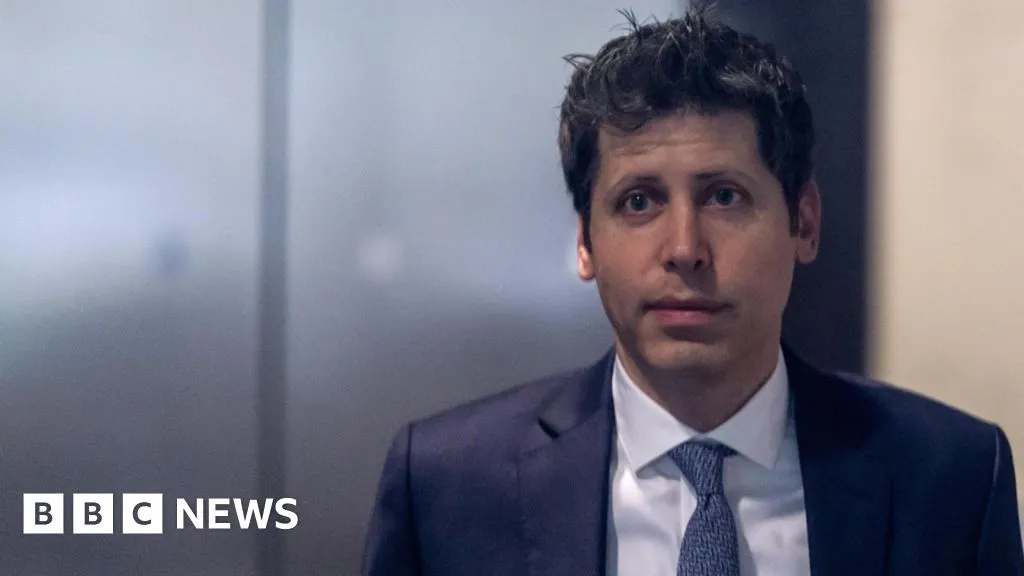
In a captivating courtroom revelation, Sam Altman, CEO of OpenAI, detailed the lengths to which Elon Musk sought control of the artificial intelligence organization he co-founded. During testimony at a federal jury trial in Oakland, California, Altman recounted Musk's controversial remarks regarding leadership succession in the event of his death, stating that Musk suggested control of OpenAI should be inherited by his children.
Altman characterized Musk's repeated efforts to dominate the direction of OpenAI, claiming that those ambitions intensified as the company pivoted from its nonprofit roots to a for-profit structure. "A particularly hair-raising moment was when my co-founders asked, 'If you have control, what happens when you die?'" Altman recalled, asserting that Musk's response implied a desire to keep the venture within his family.
Musk's Influence on OpenAI's Direction
Testifying against Musk, who has filed a lawsuit accusing Altman of "looting a charity," Altman stated that Musk had envisioned a future where OpenAI would not only proliferate but also remain under his sway. Musk's aspirations reportedly included increasing his representation on the board, assuming the role of chief executive, and integrating OpenAI as a subsidiary of Tesla, his electric vehicle enterprise.
During the proceedings, Altman reflected on Musk's emphasis on aggressive revenue generation, asserting that conversations often revolved around the necessity of restructuring OpenAI for quicker financial gains. "He felt he should be in charge, partly because of his reputation as a business magnate capable of securing funding," Altman noted, recalling Musk’s claim that a single tweet could vastly enhance the company’s financial prospects.
Concerns Over Control and Purpose
Despite Musk's allure of potentially easier financing, Altman and co-founders Greg Brockman and Ilya Sutskever expressed deep reservations about ceding control to the high-profile entrepreneur. Altman articulated his discomfort, stating, "One of the reasons we started OpenAI was because we didn’t think any one person should have control over artificial general intelligence (AGI)."
AGI, as described in the tech community, refers to AI capabilities that could surpass human performance across a wide array of tasks—raising profound ethical questions about governance and oversight.
Musk eventually distanced himself from OpenAI in early 2018, formally halting his substantial financial contributions, which had averaged $5 million per quarter. Altman recounted an eye-catching email from Musk declaring that OpenAI had a "zero percent chance" of success without his involvement. When offered a chance to invest in OpenAI's for-profit branch in 2019, Musk declined, citing his reluctance to invest in ventures lacking his control.
This trial not only highlights the contentious relationship between two of tech's most prominent figures but also raises critical questions about the future of artificial intelligence and the ethical implications of its governance.
Source: BBC News
Source: BBC News - Business