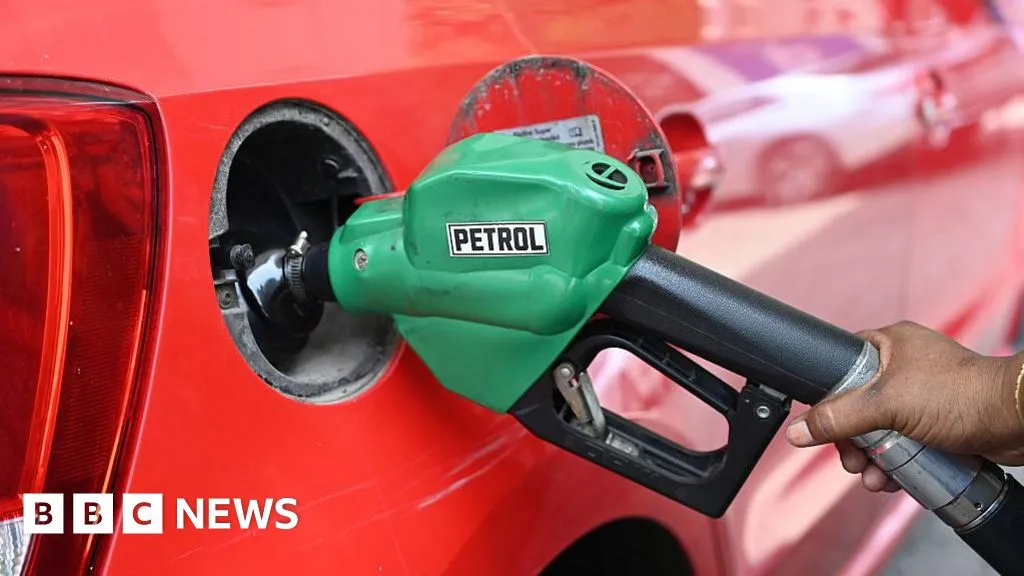
Oil prices have taken a dramatic downturn on renewed hopes for a peace agreement between the United States and Iran, a development that could significantly alter energy dynamics in the Middle East. Following remarks by former President Donald Trump indicating that negotiations have reached a crucial phase, market participants reacted swiftly, backing a bullish outlook that led to a decrease in oil prices.
On Saturday, Trump announced on social media that a tentative deal had been "largely negotiated" and suggested that further specifics would be forthcoming soon. However, by Sunday, he had called for caution, instructing his negotiating team to ensure thoroughness in finalizing the agreement. Analysts view these discussions as pivotal to resolving ongoing tensions, particularly in the context of the protracted US-Iran conflict that escalated in February.
On Monday, benchmark Brent Crude oil prices dropped 5.5% to $97.90 per barrel, while US West Texas Intermediate Crude fell by 5.9% to $90.93. The sharp decline in oil prices coincided with a bullish rally in Asian stock markets, most notably the Nikkei 225, which surged past the 65,000 mark for the first time by gaining 3%—a reflection of investor optimism concerning a resolution in the Strait of Hormuz.
The Strait of Hormuz, a crucial maritime corridor through which approximately 20% of the world’s oil and liquefied natural gas typically transit, has been effectively restricted since the onset of conflict. A reopening of this vital shipping route is seen as integral to stabilizing global energy supplies.
Trump further revealed that he had engaged in discussions with leaders from Saudi Arabia, the UAE, and other Gulf states to outline a "Memorandum of Understanding pertaining to PEACE." He remarked that the final details of the deal are “currently being discussed and will be announced shortly.” While maintaining that any agreement would prevent Iran from developing nuclear weapons, he emphasized the importance of careful negotiation, stating, “Both sides must take their time and get it right. There can be no mistakes!”
Iranian officials have noted that US-Iran positions have begun to align, although they cautioned that discrepancies remain unresolved. Iranian Foreign Ministry spokesman Esmaeil Baqaei remarked on state television that despite converging views, the path to a solid agreement is fraught with challenges due to inconsistencies in American statements.
Recent turmoil in the global energy markets can be attributed to Iran’s threats of retaliation against maritime activity within the Strait of Hormuz amidst continued US and Israeli strikes. While the current dip in oil prices offers temporary relief, prices remain elevated compared to pre-war levels—around $70 per barrel before the conflict escalated. Furthermore, experts suggest that even under optimistic scenarios, oil markets may continue to experience tight conditions through 2027 as normalization of oil flows and infrastructure repairs will take considerable time following significant disruptions.
In the ongoing context of war, ceasefires, and complex diplomatic negotiations, Saul Kavonic, head of energy research at MST Financial, commented, “There is now some light at the end of the tunnel, which will bring some near-term oil price relief.” However, he cautioned that the broader implications for the energy market remain uncertain.
Source: BBC News
Source: BBC News - Business