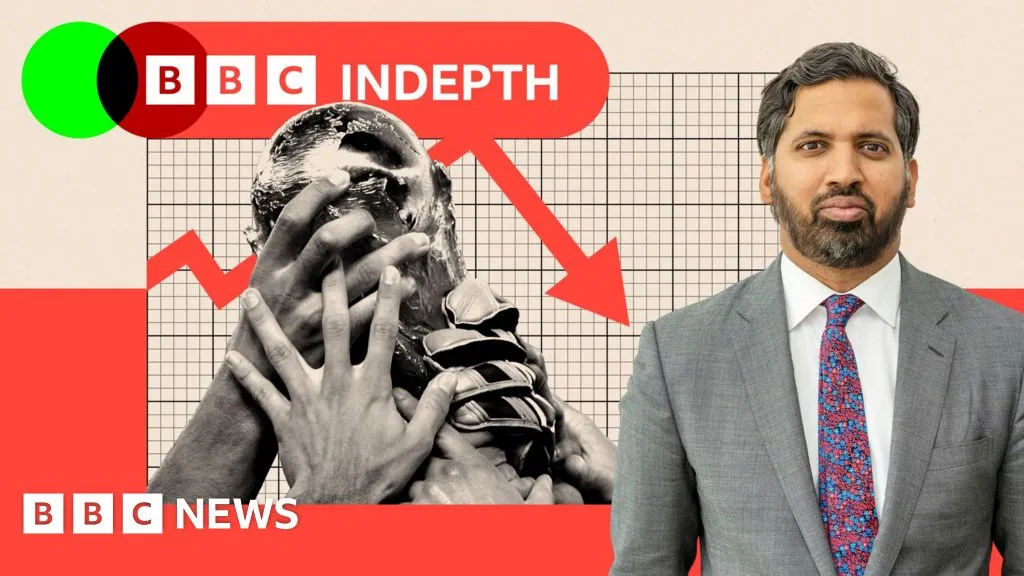
The 2026 FIFA World Cup is set to become a pivotal event not just in international football but in the realm of global economics, marked by soaring ticket prices and complex geopolitical strains. With the tournament's opening kicking off amidst a backdrop of trade wars and military tensions, this World Cup will be unlike any witnessed before.
A Tournament in Turmoil
The three co-hosts—United States, Canada, and Mexico—find themselves immersed in an escalating trade war while simultaneously preparing for the grand spectacle of soccer. The upcoming matches will unfold against a significant geopolitical backdrop; the US is currently engaged in a military conflict with Iran, a nation that might surprisingly feature among the teams competing. As tensions simmer, the logistics of hosting an international event under such conditions raises questions about safety, diplomacy, and the overall atmosphere of the tournament.
Trump's Unconventional Engagement
US President Donald Trump's engagement with the World Cup reflects a uniquely American approach to the event. Following his return to office, Trump has openly joked about the advantages that his political comeback has for American sportsmanship, even hinting at tactical shifts in response to international conflicts. His interaction with FIFA, including controversially accepting a Peace Prize prior to the tournament, further underscores the intersection of politics and sports in a rapidly changing world.
Fan Experiences in the New Economic Reality
This year, football fans are feeling the crunch more than ever before. Echoing the words of famed Scottish manager Jock Stein, “Football is nothing without the fans,” yet their wallets are being tested as never before. Some fans are shelling out exorbitant prices for tickets, with typical game costs soaring into uncharted territories, often overshadowed by incremental expenses like transportation to the stadiums. For instance, a normally affordable $12.90 train fare to New Jersey’s MetLife Stadium has ballooned to an astonishing $100 during the tournament.
Football Meets Economic Stratification
The 2026 World Cup epitomizes the phenomenon of the K-shaped economic recovery, where distinct segments of society are experiencing vastly different financial realities. This polarized economic landscape is dissecting attending fans into tiers, highlighting a clear disparity between those who can afford premium experiences and those relegated to more economical choices. FIFA contends that the high revenues generated during this World Cup will be redistributed to foster football development in less affluent countries, challenging critics to assess the transparency and effectiveness of such claims.
Looking Ahead
As the tournament progresses and geopolitical machinations continue, a crucial question looms: Can a sporting event influence the global economic struggles faced by countries embroiled in conflict? While FIFA and fans alike hope for a spirit of camaraderie and celebration, the stark realities of international economics will undoubtedly shape the World Cup's narrative.
Source: BBC News - Business