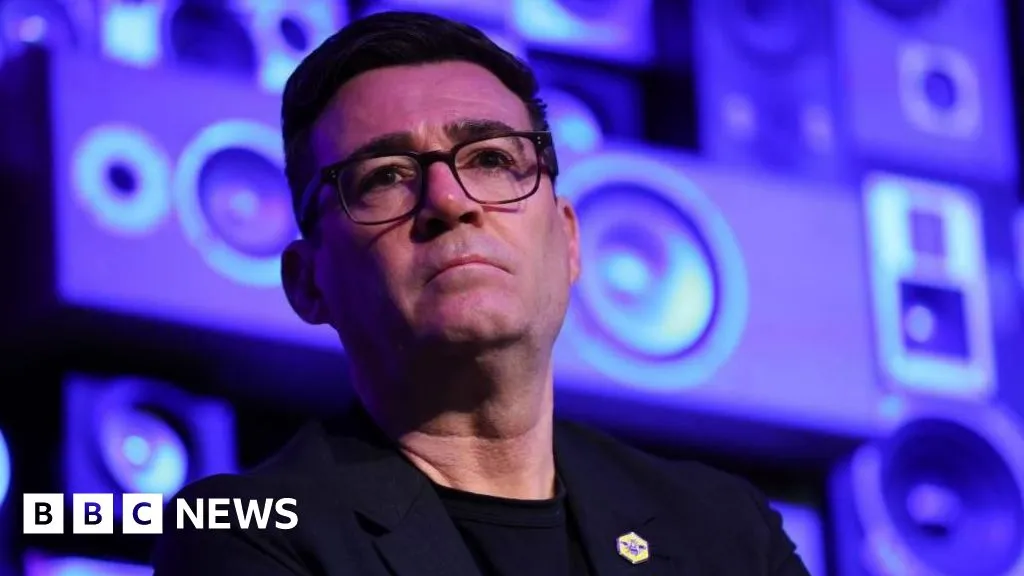
In a dramatic shift for the UK economy, government borrowing costs have surged to a staggering 18-year high, while the pound has plummeted in response to the ongoing Labour leadership struggle, prominently marked by Andy Burnham's recent announcement to contest a parliamentary by-election.
Market analysts attribute these alarming moves directly to fears surrounding a Burnham-led government, which is perceived as likely to increase public borrowing. On Friday, the yield on 10-year government bonds, a barometer of borrowing costs, spiked above 5.17%, marking its highest level since the financial crisis of 2008. Concurrently, the pound weakened by 0.3% against the US dollar, settling at roughly $1.336.
Kathleen Brooks, research director at XTB, noted that these developments reflect concerns about Burnham's market stance, stating, "This is a sign that Burnham is the least market-friendly of all the candidates," adding that his rivals did not elicit a comparable negative impact on the pound.
Wider Implications on the Economy
As the political landscape shakes, long-term borrowing costs have also reached unprecedented levels, with the yield on 30-year gilts peaking at 5.84% on Friday afternoon. Compounding these issues, other European nations have seen similar increases, but the UK's fluctuations are particularly pronounced.
Concerns surrounding the ongoing conflict in the Middle East, specifically the war in Iran, continue to influence global inflation, reflected in rising oil prices—Brent crude surged above $109 a barrel before settling back to just under $108.
Market fears intensified as comments from Burnham last year indicated a departure from conventional fiscal restraint, asserting that the government needed to "get beyond this thing of being in hock to the bond markets." AJ Bell investment director Russ Mould pointed out that while Burnham’s parliamentary prospects remain uncertain, his statements have already added pressure to borrowing costs and weakened the pound.
The Political Landscape Remains Uncertain
As the FTSE 100 index dipped by 1.7% on Friday, the diminishing confidence in UK governance became evident. Brooks emphasized that the volatility was largely due to a potential drift leftward in government policy and the prevailing uncertainty from the current leadership chaos. She cautioned, "If there is a major rout in the pound and/or gilts in the coming days, prospective candidates may need to reassess their timings for opposing the Prime Minister."
Meanwhile, Burnham’s announcement to run for a parliamentary seat comes after incumbent MP Josh Simons declared his intention to step down, paving the way for the Labour leadership contender. In a statement made Thursday evening, Burnham vowed to "change Labour for the better and make it a party you can believe in again," promising to rectify what he described as a faltering political environment.
However, his path is fraught with challenges. He must first secure selection as a candidate for the Makerfield constituency and emerge victorious in a closely watched by-election against potential strong opposition, including candidates from Reform UK.
As the situation evolves, the implications for both the UK economy and political landscape remain deeply intertwined, creating a compelling narrative of uncertainty and potential transformation.
Source: BBC News
Source: BBC News - Business